

The decisions you make in the weeks and months before your cosmetic procedure can be just as important as the skill of your surgeon. From optimizing your nutrition and reaching a stable weight to eliminating habits that impair healing, thorough physical preparation sets the stage for a smoother recovery and a more beautiful outcome. Below, the team at Careaga Plastic Surgery walks you through a practical, week-by-week timeline so you know exactly what to do—and when to do it.
Why Pre-Surgical Preparation Matters
Cosmetic surgery is elective, which means you have the advantage of time—time to condition your body so it can heal efficiently and deliver the aesthetic results you envision. Research published in the journal Anaesthesia confirms that prehabilitation—a combination of exercise, nutrition, and psychological preparation before surgery—promotes better surgical outcomes. Patients who invest in this process experience fewer post-operative complications and recover to their baseline function faster.
Your surgeon handles the technical work, but your body handles the healing. Providing it with optimal fuel, adequate fitness, and freedom from harmful substances is your most powerful contribution to a successful result.
8–6 Weeks Out: Foundation Phase
1. Reach and Stabilize Your Target Weight
Body contouring procedures such as liposuction and tummy tuck surgery deliver their best results when you are at or near your ideal weight. Being at a healthy weight reduces the likelihood of complications during surgery and allows your surgeon to sculpt desired contours more effectively. If you still need to lose a few pounds, this window gives you time to do so gradually and safely—crash dieting close to surgery depletes nutrients your body will need to heal.
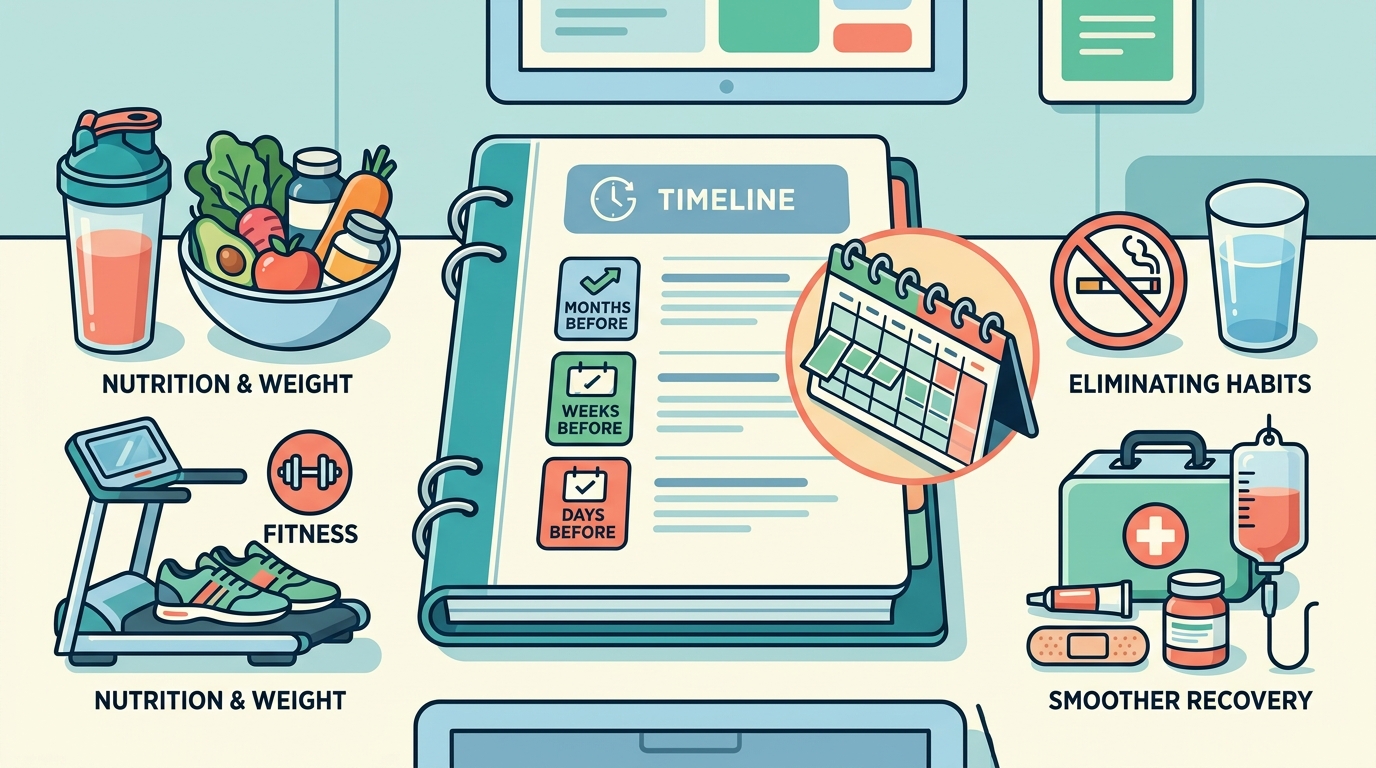
2. Begin a Consistent Exercise Routine
Regular physical activity leading up to surgery improves overall health and lessens the risk of complications. Whether it is walking, swimming, biking, or strength training, staying active promotes circulation and conditions your cardiovascular system for the demands of anesthesia and recovery. Aim for at least 30 minutes of moderate exercise per day—a pace at which you can still carry on a conversation—along with strength-training sessions three days per week.
3. Overhaul Your Diet
Start replacing processed foods and refined carbohydrates with whole, nutrient-dense alternatives. Key nutritional priorities include:
- Lean protein — Essential for tissue building and repair; aim for 80–100 grams per day depending on body weight.
- Vitamins A and C — Help your body repair tissue damage, fight infection, and organize collagen into strong structures for optimal wound healing.
- Zinc — Promotes collagen synthesis so incisions heal beautifully.
- Fiber-rich fruits and vegetables — Prevent digestive issues commonly associated with anesthesia and pain medication.
- Probiotics — Support gut health, which can be disrupted by the antibiotics commonly prescribed around surgery. Yogurt and fermented foods are excellent sources.
Simultaneously, limit sugar and sodium intake because both contribute to inflammation and increased post-operative swelling.
4. Quit Smoking and Nicotine Products
This step is non-negotiable. Nicotine greatly impacts your body's ability to heal, resulting in prolonged recovery times and potentially more visible scarring. Most board-certified cosmetic surgeons require patients to quit smoking for at least four to six weeks before and after surgery. Vaping and nicotine patches count—any form of nicotine constricts blood vessels and starves healing tissue of oxygen.
5. Hydrate Aggressively
Water is the largest component of the human body, comprising 60 to 75 percent of your total mass. It is essential for skin hydration, digestion, metabolism, and hormonal balance. Aim for a minimum of 64 ounces daily—roughly eight glasses—starting now. Proper hydration also helps flush toxins, boost energy levels, and enhance bodily functions, all of which improve recovery from cosmetic surgery.
4–2 Weeks Out: Fine-Tuning Phase
6. Complete Medical Clearance
Your surgeon will instruct you on necessary lab work—typically blood tests, urinalysis, and possibly an EKG or chest X-ray—to confirm you are healthy enough for anesthesia. See your primary care physician promptly so results are available at least two weeks before your procedure date.
7. Discontinue Risky Medications and Supplements
Two weeks prior to surgery, it is time to stop any medications or supplements that may interfere with anesthesia, bleeding time, or healing. Common items to avoid include aspirin, ibuprofen, vitamin E, fish oil, and most herbal supplements such as ginkgo biloba, garlic extract, and St. John's wort. Acetaminophen (Tylenol) is generally acceptable for pain relief during this window, but always confirm with your surgeon.
8. Reduce Alcohol and Caffeine
Alcohol acts as a blood thinner, increasing the risk of bleeding and bruising, and it can interfere with anesthesia. Gradually reduce your consumption of alcoholic, caffeinated, and carbonated beverages as surgery approaches, with a full stop at least 72 hours before the procedure.
9. Fill Prescriptions and Stock Recovery Supplies
Pick up all post-operative prescriptions in advance—pain medications, antibiotics, sleep aids, and anti-nausea medication as applicable. Gather recovery essentials such as ice packs, gauze, compression garments, pillows for elevation, throat lozenges, and gentle laxatives. Prepare several days' worth of healthy, easy-to-reheat meals so you are not tempted by inflammatory convenience foods while recovering.
The Final Week
10. Set Up Your Recovery Space
Choose a comfortable area at home where you can rest with easy access to medications, water, and entertainment. Stock the space with extra pillows, a phone charger, remote controls, books, and anything else you will need within arm's reach. If your bedroom is upstairs, consider setting up a temporary sleeping area on the main floor.
11. Arrange Your Support Network
Recovery from plastic surgery can be physically and emotionally demanding. Enlist the help of trusted friends or family members who can assist with household tasks, meal preparation, transportation to follow-up appointments, and emotional support during recovery. Make sure at least one responsible adult is available to stay with you for the first 24–48 hours after your procedure.
12. Handle Personal Logistics
Pay bills, arrange pet or child care, complete any urgent work obligations, and notify your employer about your anticipated time off. Taking care of these details in advance removes stress and lets you focus entirely on healing.
13. Prepare Your Body on the Surface
Wash your entire body with antibacterial soap in the days before surgery. For patients having breast surgery, avoid shaving the armpits for three days prior. If you are having facial plastic surgery, avoid facials and facial cosmetic treatments in the weeks leading up to the procedure.
Day-of Surgery Checklist
- Follow your surgeon's fasting instructions—most cosmetic surgeries require no eating or drinking after midnight.
- Wear loose-fitting, comfortable clothing. A front-zip or button-up top works well for upper-body procedures; elastic-waist pants are ideal.
- Remove all jewelry, including piercings.
- Arrive without makeup, nail polish, or fragrances.
- Bring your insurance card, ID, advance directive documents, and a container for eyeglasses or contact lenses.
- Leave credit cards and valuables at home.
- Confirm your ride home—you will not be able to drive yourself.
Mental & Emotional Readiness
Surgery is not just a physical journey but a mental one as well. Going into surgery with the right mindset is crucial for a successful outcome, and recovery is much easier when you are mentally prepared.
Set Realistic Expectations
Cosmetic surgery can enhance your appearance, but it is important to have realistic expectations about the results. Discuss detailed goals with your surgeon, review before-and-after photos of previous patients, and understand both the possibilities and limitations of your chosen procedure.
Address Anxiety and Mental Health
If you suffer from depression, anxiety, or other mental health disorders, it is important to get these conditions under control before surgery. These conditions can make recovery more difficult. Consider speaking with a therapist, especially if you are dealing with body image concerns. Mental preparation can significantly impact your satisfaction with results and your recovery experience.
Build Confidence Through Knowledge
The more informed you are, the better equipped you will be to make decisions and manage expectations. Attend your pre-operative appointment with a list of questions, and do not hesitate to seek a second opinion if something feels uncertain.
Key Takeaways
- Start early. A commitment to health and wellness that begins weeks or months in advance yields the smoothest pre- and post-operative experience.
- Nutrition is medicine. Lean protein, vitamins A and C, zinc, and probiotics directly accelerate wound healing and reduce bruising and swelling.
- Eliminate nicotine completely. No cigarettes, vapes, or patches for at least 4–6 weeks before and after surgery.
- Move your body. Moderate daily exercise and strength training condition your cardiovascular and muscular systems for surgery and recovery.
- Prepare your environment. A well-stocked recovery space and a reliable support network remove stress so your body can focus on healing.
- Follow your surgeon's instructions to the letter. Every directive—from medication changes to fasting rules—exists to protect your safety and your results.
Frequently Asked Questions
How far in advance should I start preparing for cosmetic surgery?
Ideally, begin lifestyle changes such as diet improvements, exercise, and smoking cessation at least 6–8 weeks before your scheduled procedure. Dietary changes should start at least 2–4 weeks before surgery, though earlier is always better.
Can my pre-operative diet really affect my surgical results?
Yes. Your pre-operative diet can significantly influence your surgical outcomes. Achieving a stable, healthy weight before surgery and maintaining a balanced, nutritious diet can optimize your healing process, reduce the risk of complications, and enhance your overall cosmetic results.
Why do I need to stop taking supplements before surgery?
While some supplements support immune function, others can interfere with anesthesia, increase bleeding, or cause complications. Your surgeon will provide a specific list of substances to discontinue, typically two weeks before the procedure.
What happens if I do not quit smoking before surgery?
Nicotine impairs wound healing and increases the risk of complications including prolonged recovery times, more visible scarring, and even tissue death in severe cases. Surgeons may postpone your procedure if nicotine is detected in your system.
How important is exercise before cosmetic surgery?
Very important. Research shows that patients who engage in prehabilitation—including regular exercise—have fewer post-operative complications and recover more quickly. Strengthening core muscles and improving cardiovascular health contribute to a more toned appearance post-surgery as well.
What should I eat in the weeks before surgery?
Focus on lean proteins, colorful fruits and vegetables rich in vitamins A and C, zinc-containing foods like nuts and seeds, probiotic-rich foods like yogurt, and plenty of water. Avoid processed foods, excess sugar, sodium, and alcohol.