

Selecting the right surgeon for abdominoplasty requires rigorous credential verification. According to the American Society, board-certified specialists perform over one million cosmetic procedures annually across the United States. This volume highlights the critical importance of verifying surgical credentials before scheduling an initial consultation. Patients must prioritize verified facility accreditation and direct surgeon experience when evaluating potential providers. The decision directly impacts recovery timelines and long-term aesthetic outcomes.
Verify Board Certification and Facility Standards
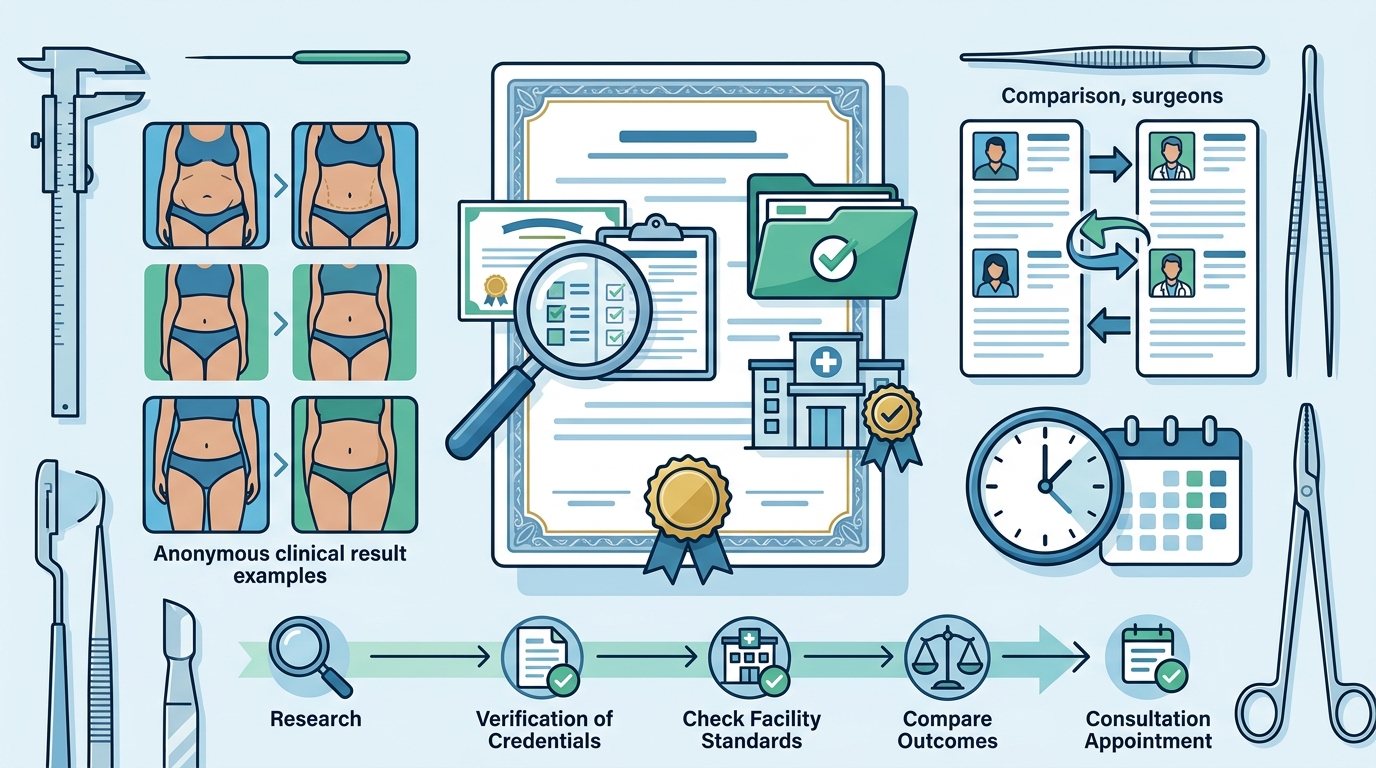
Board certification remains the foundational requirement for any cosmetic procedure. A board-certified plastic surgeon is a physician who has completed rigorous training and passed comprehensive examinations administered by the American Board of Plastic Surgery. This credential guarantees that the practitioner meets strict educational and ethical standards. You should always request to see the official certification card during your initial visit. Many clinics display this information prominently, but direct verification through the official registry is always recommended.
Facility accreditation operates alongside surgeon credentials to ensure patient safety. An accredited surgical facility is a medical environment that meets specific safety, equipment, and staffing requirements established by recognized healthcare organizations. These standards mandate proper anesthesia monitoring, emergency protocols, and sterile surgical environments. Choosing an accredited facility significantly reduces the risk of postoperative complications. You can verify accreditation status through official healthcare databases before signing any agreements.
Reviewing the body procedures page on your chosen clinic website provides immediate insight into their surgical focus. Clinics that specialize in complex abdominal contouring typically maintain higher accreditation standards. This specialization directly correlates with improved patient outcomes and streamlined recovery protocols.
Review Surgical Volume and Specialized Training
Surgical volume directly influences procedural success rates. High-volume surgeons perform abdominoplasty procedures multiple times each week, which refines technical precision and reduces operative time. According to the National Institutes, experienced surgeons consistently demonstrate lower complication rates and faster patient recovery timelines. You should ask specific questions about their annual case volume and how many tummy tuck procedures they perform monthly. Surgeons who focus exclusively on body contouring often develop highly efficient surgical workflows.
Specialized training in abdominal wall reconstruction adds another layer of safety. A board-certified plastic surgeon is a physician who has completed rigorous training and passed comprehensive examinations administered by the American Board of Plastic Surgery. This definition applies equally to facial and body procedures, but abdominal surgery requires specific expertise in muscle repair and fascial tightening. You should verify that your chosen provider has extensive experience with both standard and complex revision cases.
Examining the facial rejuvenation offerings can also reveal a surgeon's technical discipline. Surgeons who master delicate facial procedures often apply that same precision to abdominal contouring. This cross-disciplinary expertise frequently translates to cleaner incision lines and more predictable aesthetic results.
Evaluate Before and After Portfolio Consistency
Visual documentation serves as the most reliable indicator of surgical capability. A verified before and after portfolio is a curated collection of actual patient results that demonstrates consistent surgical technique across various body types. You should look for patients who share similar anatomical characteristics to your own. Consistent results across diverse body masses indicate superior surgical planning and execution.
Transparency in portfolio presentation matters significantly. Clinics that publish unedited, high-resolution images without heavy filtering demonstrate confidence in their work. You should also check for long-term follow-up photos that show how results mature over twelve to twenty-four months. This long-term perspective reveals how well the surgical team manages tissue healing and scar formation.
Reviewing the educational blog resources often reveals additional patient success stories. Many reputable practices document their surgical philosophy and patient education materials alongside their visual galleries. This comprehensive approach helps prospective patients understand the realistic expectations for their specific anatomy.
Assess Consultation Communication and Transparency
Communication quality during the initial consultation predicts your entire surgical journey. A thorough consultation is a comprehensive medical evaluation that covers your health history, aesthetic goals, and surgical options. You should expect a detailed physical examination that measures your abdominal wall integrity and skin elasticity. Surgeons who rush through consultations often lack the time to address your specific concerns adequately.
Transparent pricing structures prevent unexpected financial stress. A transparent pricing structure is a clear financial breakdown that lists all surgical fees, anesthesia costs, facility charges, and postoperative care expenses. You should request a written quote that itemizes every component of your surgical package. Reputable practices provide comprehensive financial transparency before you commit to scheduling your procedure.
Understanding the revision surgery process can also inform your decision. Surgeons who openly discuss revision protocols demonstrate confidence in their primary results. This transparency ensures you understand the full scope of care and potential long-term maintenance requirements.
Understand Postoperative Support and Revision Policies
Postoperative care directly impacts your final aesthetic outcome. Comprehensive postoperative support is a structured recovery program that includes scheduled follow-up visits, wound care instructions, and emergency contact availability. You should verify that your surgeon provides direct access to their clinical team during your recovery period. Delayed response times to postoperative concerns can significantly increase complication risks.
Revision policies vary widely among practices. A clear revision policy is a documented agreement that outlines the conditions under which corrective procedures are covered or discounted. You should ask specific questions about scar management, asymmetry corrections, and muscle repair adjustments. Practices that offer structured revision support demonstrate long-term commitment to patient satisfaction.
Visiting the main practice website allows you to review patient testimonials and facility information. Reading verified patient experiences provides valuable context about the actual recovery process. Many patients highlight the importance of having a dedicated care team that monitors their progress closely.
Comparing Surgical Approaches and Recovery Timelines
Different abdominal contouring techniques require distinct recovery protocols. The following table outlines the primary surgical options and their typical recovery expectations.
| Surgical Approach | Primary Indication | Typical Recovery Duration | Best Candidate Profile |
|---|---|---|---|
| Standard Abdominoplasty | Excess skin and muscle separation | Two to four weeks | Patients with significant weight loss |
| Mini Abdominoplasty | Lower abdominal laxity only | One to two weeks | Patients with minimal upper abdominal concerns |
| Extended Abdominoplasty | Full torso contouring needs | Three to five weeks | Patients with lateral fat deposits |
| Liposuction-Assisted | Fat reduction with skin tightening | One to three weeks | Patients with good skin elasticity |
Key Takeaways
- Board certification by the American Board of Plastic Surgery is the non-negotiable baseline for abdominal surgery.
- Facility accreditation ensures proper anesthesia monitoring and emergency preparedness during your procedure.
- High surgical volume directly correlates with lower complication rates and faster recovery timelines.
- Unedited before and after portfolios demonstrate consistent technical precision across diverse body types.
- Transparent pricing structures prevent unexpected financial stress and clarify all surgical costs upfront.
- Comprehensive postoperative support includes direct clinical team access and structured follow-up scheduling.
Frequently Asked Questions
How do I verify a plastic surgeon's board certification?
You can verify board certification by visiting the official American Board of Plastic Surgery website and searching the physician's name. This official registry confirms their completion of accredited training programs and successful examination passage. Always request to see the physical certification card during your consultation.
What is the difference between a mini tummy tuck and a standard procedure?
A mini tummy tuck is a limited surgical procedure that addresses only the lower abdominal area with a shorter incision. A standard abdominoplasty is a comprehensive surgical procedure that repairs both upper and lower abdominal muscles with an extended incision. Your anatomical assessment determines which approach yields the best aesthetic result.
How long does recovery typically take after abdominal surgery?
Recovery timelines vary based on the surgical technique and individual healing factors. Most patients return to light desk work within two weeks and resume full physical activities within four to six weeks. Your surgeon will provide a customized recovery schedule based on your specific procedure.
What credentials should I look for in a surgical facility?
You should prioritize facilities accredited by recognized healthcare organizations such as the Accreditation Association for Ambulatory Health Care. These organizations enforce strict safety protocols regarding equipment, staffing, and emergency preparedness. Accredited facilities significantly reduce postoperative complication risks.
Can insurance cover the cost of an abdominoplasty?
Insurance coverage for cosmetic abdominal surgery is extremely rare and typically requires documented medical necessity. Panniculectomy procedures may receive partial coverage if excess skin causes chronic skin infections or mobility issues. You should consult your insurance provider directly to verify specific policy allowances.
How do I choose between a board-certified plastic surgeon and a general surgeon?
Board-certified plastic surgeons complete specialized fellowship training focused exclusively on aesthetic and reconstructive body contouring. General surgeons focus on life-saving internal organ procedures and lack specialized aesthetic training. Abdominal contouring requires specific expertise in fascial repair and skin redraping techniques.
Schedule Your Consultation Today
Finding a qualified plastic surgeon requires careful verification of credentials, facility standards, and surgical experience. You should prioritize providers who demonstrate transparency, high surgical volume, and comprehensive postoperative support. Contact our Miami-based practice to schedule your personalized consultation and review your surgical options. Visit https://www.careagaplasticsurgery.com/ to begin your journey toward confident abdominal contouring.