

Step-by-Step Guide to Male Chest Reduction and Gynecomastia Surgery
Gynecomastia, the medical term for enlarged male breast tissue, affects a significant portion of the male population across various age groups. According to the American Society of Plastic Surgeons, gynecomastia is one of the top five cosmetic procedures for men in the United States, with thousands of men seeking surgical correction annually to restore a flatter, more masculine chest contour. This condition is not merely a cosmetic concern; it often causes profound psychological distress, social anxiety, and physical discomfort. For men who have exhausted diet and exercise without success, gynecomastia surgery, also known as male chest reduction, offers a permanent solution. This guide details the entire patient journey, from understanding the root causes to selecting the right surgeon and navigating post-operative recovery. (Top Miami Plastic Surgeons)
Understanding Gynecomastia: Causes and Diagnosis
Gynecomastia is defined as the benign enlargement of glandular tissue in the male chest. It is crucial to distinguish this from pseudogynecomastia, which is caused solely by excess fat deposits without glandular growth. The condition arises from an imbalance between estrogen and testosterone levels. This hormonal shift can occur during several life stages, including puberty, adulthood, and older age. During puberty, hormonal fluctuations are common, and while many cases resolve naturally, persistent gynecomastia often requires intervention. (Careaga Plastic Surgery Blog)
In adults, various factors contribute to the development of enlarged breast tissue. These include obesity, liver disease, hyperthyroidism, and the use of certain medications or anabolic steroids. According to medical literature, the prevalence of gynecomastia in adult men is estimated to be between 30% and 65%, depending on the age group studied. At Careaga Plastic Surgery, we evaluate each patient to determine if the enlargement is glandular, fatty, or a combination of both. This distinction is vital because it dictates the surgical approach. A thorough physical examination and medical history review are the first steps in diagnosing the condition and ruling out underlying health issues.
Surgical Techniques: Liposuction vs. Excision
Male chest reduction is not a one-size-fits-all procedure. The technique selected depends on the composition of the chest tissue and the desired aesthetic outcome. The two primary methods are liposuction and direct excision, often used in combination for optimal results.
Liposuction for Male Chest Reduction
Liposuction is the preferred technique for patients whose gynecomastia is primarily caused by excess fatty tissue rather than dense glandular tissue. This method involves making small, discreet incisions, typically in the armpit or along the lower breast fold. A cannula is inserted to suction out the fat, contouring the chest to a flatter profile. Liposuction offers a shorter recovery time and minimal scarring. However, it cannot remove dense glandular tissue, which requires surgical excision.
Direct Excision for Glandular Tissue
When glandular tissue is present, direct excision is necessary. This technique involves removing the firm breast tissue directly through the skin. For mild cases, surgeons may use a periareolar incision around the edge of the areola. In more severe cases, where significant skin removal is needed, a larger incision may be required. The goal is to remove the glandular tissue while preserving the nipple-areola complex. At Careaga Plastic Surgery, we utilize advanced techniques to ensure that scars are as inconspicuous as possible, healing to fine lines that are easily concealed.
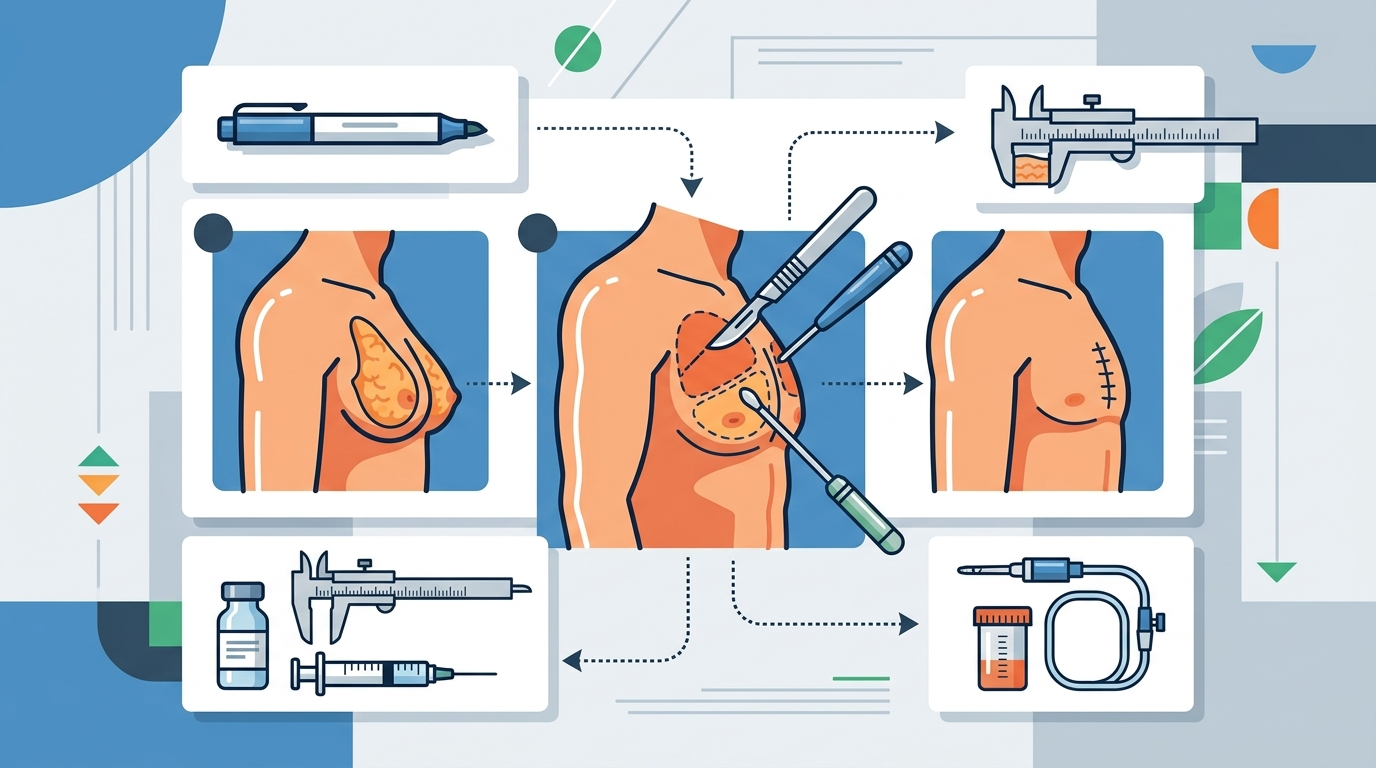
The Step-by-Step Surgical Process
Understanding the surgical process can alleviate anxiety and set realistic expectations. The procedure is typically performed under general anesthesia or intravenous sedation, ensuring patient comfort throughout. Here is a step-by-step breakdown of what happens during gynecomastia surgery.
Step 1: Pre-Operative Marking
Before the surgery begins, the surgeon marks the chest while the patient is standing. These markings guide the removal of tissue and help define the new chest contour. Precision in marking is critical for achieving symmetry and a natural appearance.
Step 2: Anesthesia Administration
Once the patient is comfortable, anesthesia is administered. Our team monitors vital signs continuously to ensure safety. The choice of anesthesia depends on the extent of the surgery and the patient’s medical history.
Step 3: Tissue Removal
The surgeon begins with liposuction to remove excess fat. This step helps to blend the chest with the surrounding torso, creating a smooth transition. Next, if glandular tissue is present, it is carefully excised. The surgeon removes the tissue in layers, preserving the blood supply to the nipple. This step requires meticulous attention to detail to avoid contour irregularities.
Step 4: Closure and Dressing
After the tissue is removed, the incisions are closed with sutures. Drains may be placed to remove excess fluid and reduce swelling. A compression garment is then applied to the chest. This garment is essential for minimizing swelling, supporting the healing tissues, and helping the skin retract to its new contour.
Recovery and Post-Operative Care
Recovery from gynecomastia surgery is generally straightforward, but adherence to post-operative instructions is crucial for optimal results. The first week is the most critical period for healing. Patients typically experience swelling, bruising, and mild discomfort, which can be managed with prescribed medication.
Immediate Post-Operative Period
During the first few days, rest is essential. Patients should avoid strenuous activities and keep the chest elevated to reduce swelling. The compression garment must be worn at all times, except when showering, as directed by the surgeon. Drain tubes, if used, are usually removed within a week.
Long-Term Healing
Swelling subsides gradually over several weeks. Most patients can return to work within a few days to a week, depending on the physical demands of their job. Light exercise can be resumed after two weeks, but heavy lifting and chest workouts should be avoided for at least four to six weeks. Final results are visible once all swelling has resolved, which can take up to six months. According to clinical studies, patient satisfaction rates for gynecomastia surgery are exceptionally high, with most reporting improved self-esteem and quality of life.
Choosing the Right Surgeon in Miami
Selecting a qualified plastic surgeon is the most important decision in the gynecomastia journey. Miami is a hub for plastic surgery, but not all providers offer the same level of expertise. Look for a board-certified plastic surgeon with specific experience in male chest contouring. Review before-and-after photos of previous gynecomastia patients to assess the surgeon’s aesthetic style.
At Careaga Plastic Surgery, we pride ourselves on a patient-centered approach. Our team, led by Dr. Daniel Careaga and Dr. Rafael Ramos, combines technical precision with artistic vision. We offer comprehensive consultations to discuss your goals, review your medical history, and explain the surgical plan in detail. We also provide transparent pricing and financing options to make the procedure accessible. Visit our Breast Procedures page to learn more about our specialized services for men.
Comparison of Surgical Options
| Feature | Liposuction Only | Excision Only | Combined Approach |
|---|---|---|---|
| Best For | Fatty tissue predominance | Glandular tissue predominance | Mixed tissue types |
| Scarring | Minimal, hidden scars | Periareolar or larger incisions | Minimal to moderate scarring |
| Recovery Time | Shorter | Moderate | Moderate |
| Result | Smooth contour | Flat chest, gland removal | Optimal, natural contour |
Key Takeaways
- Gynecomastia is a common condition affecting up to 65% of men, caused by hormonal imbalances or lifestyle factors.
- Surgical correction involves either liposuction, excision, or a combination, depending on tissue composition.
- Recovery typically allows a return to work within a week, with full results visible after six months.
- Choosing a board-certified surgeon with specific male chest experience is critical for safety and aesthetic outcomes.
- Patient satisfaction rates for gynecomastia surgery are consistently high, with significant improvements in self-confidence.
- Compression garments are essential during recovery to minimize swelling and support healing.
- Careaga Plastic Surgery offers personalized consultations and transparent pricing for male chest reduction.
Frequently Asked Questions
Is gynecomastia surgery permanent?
Yes, the removal of glandular tissue is permanent. However, significant weight gain or hormonal changes can cause recurrence. Maintaining a stable weight is recommended.
How long does the surgery take?
The procedure typically takes between one to two hours, depending on the complexity and the techniques used.
Will there be visible scarring?
Scars are strategically placed in natural skin folds or around the areola. Over time, they fade significantly and are usually inconspicuous.
Can I combine gynecomastia surgery with other procedures?
Yes, many patients combine chest reduction with liposuction of other areas or breast augmentation for enhanced contouring. Consult your surgeon for a customized plan.
What is the cost of gynecomastia surgery in Miami?
The cost varies based on the extent of the surgery and the techniques used. Careaga Plastic Surgery offers financing options to make the procedure more accessible. Contact us for a detailed quote.
When can I resume exercise after surgery?
Light activity can be resumed after two weeks, but heavy chest workouts should be avoided for four to six weeks to ensure proper healing.
Is the procedure painful?
Discomfort is manageable with medication. Most patients report mild pain rather than severe pain during the recovery period.
Schedule Your Consultation
If you are struggling with gynecomastia, take the first step toward a confident future. Schedule a confidential consultation with the experts at Careaga Plastic Surgery. Our team is dedicated to providing safe, effective, and personalized care. Visit our Contact Page to book your appointment today. We are here to answer your questions and guide you through every step of your journey.