

Choosing between breast implants and autologous fat transfer is one of the most significant decisions in aesthetic surgery. According to the American Society of Plastic Surgeons, breast augmentation remains the most popular cosmetic procedure for women in the United States, with over 300,000 procedures performed annually. However, a growing segment of patients is seeking natural alternatives that avoid synthetic materials. This guide breaks down the critical differences to help you make an informed choice.
Understanding the Core Procedures
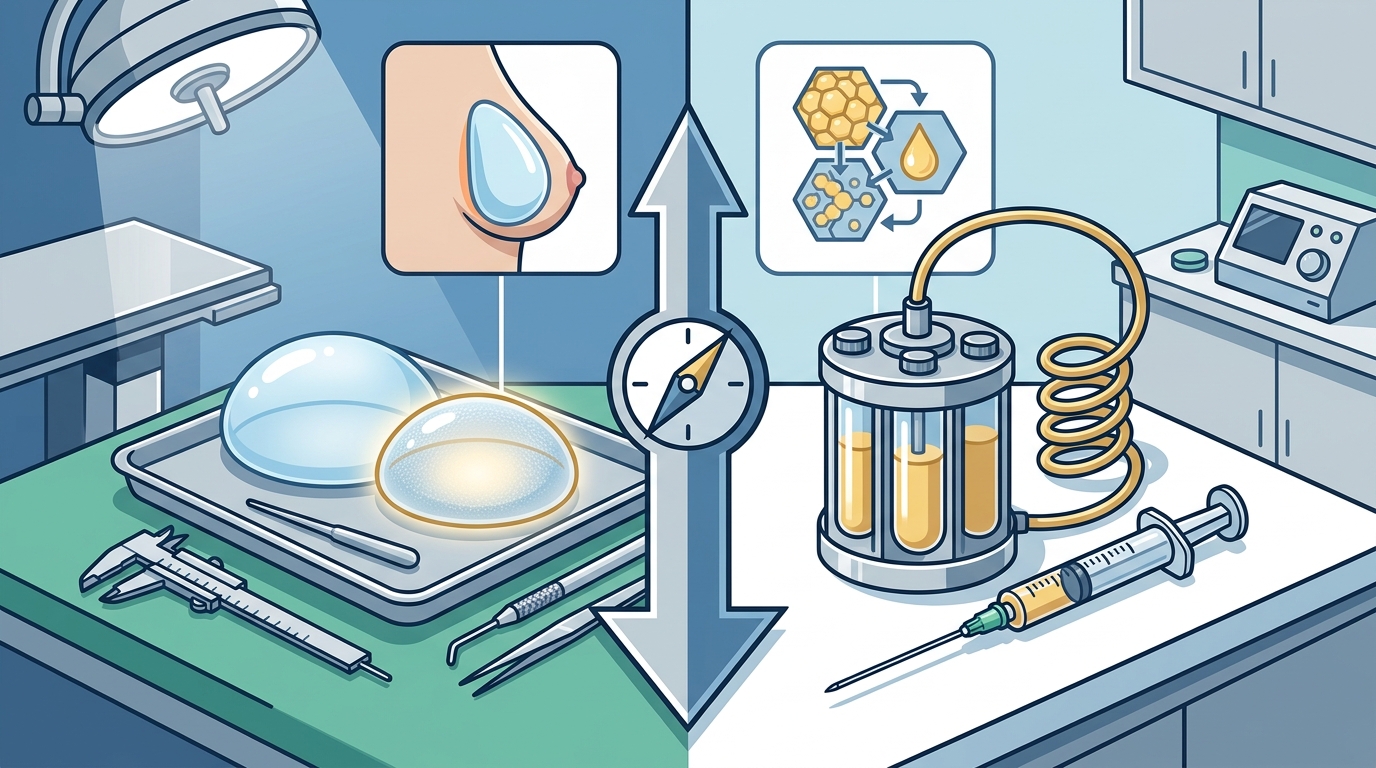
Breast augmentation, also known as mammaplasty, involves the surgical insertion of implants to increase breast volume. These implants are typically filled with saline or silicone gel. At Careaga Plastic Surgery, we utilize advanced Preservé by Motiva® implants, which are designed to minimize capsular contracture and provide a soft, natural feel. The surgeon creates a pocket in the breast tissue or under the muscle to place the device.
Fat transfer breast augmentation, or autologous fat grafting, is a two-step process. First, liposuction is performed to harvest excess fat from areas like the abdomen, thighs, or flanks. The fat is then purified and injected into the breasts in small amounts to create volume. This method is ideal for patients who desire a modest increase in size while simultaneously contouring other areas of their body.
Naturalness and Tactile Feel
One of the primary concerns for patients is how the breasts will feel and look. Breast implants provide a predictable and significant increase in size. However, some patients may feel the edges of the implant, particularly if they have thin natural tissue. Silicone implants, especially those with a cohesive gel, offer a feel that closely mimics natural breast tissue.
Fat transfer offers the most natural feel possible because the volume is composed entirely of the patient's own tissue. There is no foreign object to palpate. The results are subtle and organic, blending seamlessly with the existing breast structure. For patients seeking a dramatic change in cup size, implants may still be the superior option, but for those wanting a natural enhancement, fat transfer is unmatched.
Recovery and Downtime
Recovery varies significantly between the two procedures. Breast augmentation typically requires one to two weeks of downtime. Patients may experience swelling, bruising, and discomfort, which is managed with prescribed medication. Most patients can return to light activities within a few days but must avoid heavy lifting for several weeks.
Fat transfer involves two surgical sites: the donor area and the breast. While the incisions are tiny, the recovery can be more uncomfortable due to the liposuction component. Patients often wear compression garments on the donor sites to reduce swelling. The breasts themselves require careful handling to ensure the transferred fat cells survive. Full results may take several months to appear as the body absorbs some of the transferred fat.
Durability and Long-Term Maintenance
Breast implants are not lifetime devices. According to the FDA, patients should expect to replace or remove implants at some point in their lifetime. While many implants last 10 to 20 years, factors like capsular contracture, rupture, or personal preference may necessitate earlier revision surgery. This is a crucial financial and logistical consideration for long-term planning.
Fat transfer results are generally permanent for the fat cells that successfully establish a blood supply. However, the body naturally absorbs a percentage of the transferred fat, typically between 30% to 50%. This means the final result may be smaller than initially projected. If additional volume is desired, a second procedure may be necessary. Unlike implants, there is no risk of rupture or the need for routine replacement.
Risks and Potential Complications
Every surgical procedure carries risks. Breast augmentation risks include capsular contracture, where scar tissue tightens around the implant, potentially causing pain and distortion. Other risks include implant rupture, changes in nipple sensation, and breast implant illness (BII), a controversial condition reported by some patients. Regular monitoring with MRI or ultrasound is recommended for silicone implants.
Fat transfer risks include fat necrosis, where some of the transferred fat cells die and form hard lumps or cysts. There is also a risk of oil cysts or calcifications, which can sometimes mimic breast cancer on mammograms. It is essential to choose a board-certified plastic surgeon who understands how to inject fat safely to minimize these risks. The American Society of Plastic Surgeons provides detailed guidelines on safe surgical practices.
Ideal Candidates for Each Method
The best candidate for breast augmentation is someone who desires a significant increase in breast size, has realistic expectations, and is comfortable with the idea of living with implants. Candidates should be in good general health and non-smokers.
The ideal candidate for fat transfer is someone with sufficient excess body fat to harvest, desires a modest increase in breast size (typically one cup size or less), and wants to avoid synthetic implants. This method is also excellent for correcting asymmetry or restoring volume lost after pregnancy or weight loss.
| Feature | Breast Augmentation (Implants) | Fat Transfer (Autologous) |
|---|---|---|
| Volume Increase | Significant and predictable | Modest (1 cup size or less) |
| Natural Feel | High (with silicone) | Perfect (own tissue) |
| Downtime | 1-2 weeks | 2-3 weeks |
| Longevity | Requires future replacement | Permanent (for surviving fat) |
| Scarring | Visible incisions | Tiny puncture marks |
Key Takeaways
- Breast implants offer a more dramatic and predictable increase in size compared to fat transfer.
- Fat transfer provides the most natural feel and appearance, utilizing the patient's own tissue.
- Implants are not lifetime devices and will likely require future surgery for replacement or removal.
- Fat transfer results are permanent for the surviving fat cells, but some volume loss is expected.
- Both procedures require a consultation with a board-certified plastic surgeon to determine suitability.
- Recovery from fat transfer can be more uncomfortable due to the liposuction component.
- At Careaga Plastic Surgery, we offer both options to ensure you receive personalized care.
Frequently Asked Questions
Can fat transfer increase breast size by more than one cup?
Typically, fat transfer can increase breast size by approximately one cup size. The amount of volume gained depends on the patient's body habitus and the amount of harvestable fat. For larger increases, implants are recommended.
Do breast implants feel natural?
Modern silicone implants, particularly those with a soft gel consistency, feel very natural. The feel also depends on the patient's existing breast tissue and the placement of the implant.
Is fat transfer safer than breast implants?
Both procedures are safe when performed by a board-certified plastic surgeon. Fat transfer eliminates the risk of implant rupture but carries risks associated with liposuction and fat necrosis.
How long does recovery take for fat transfer?
Recovery from fat transfer breast augmentation usually takes two to three weeks. Patients must wear compression garments and avoid pressure on the breasts for several weeks.
Can I combine breast augmentation with a lift?
Yes, breast augmentation can be combined with a breast lift (mastopexy) to address both volume and sagging. This is a common combination procedure at Careaga Plastic Surgery.
What is the cost difference between the two procedures?
The cost varies based on the surgeon's expertise and the complexity of the case. Generally, fat transfer may be more expensive due to the dual nature of the surgery (liposuction and injection), but this is not always the case.
Will fat transfer affect mammogram results?
Fat transfer can cause calcifications that may mimic breast cancer on mammograms. It is crucial to inform your radiologist about your history of fat transfer to ensure accurate interpretation.
Schedule Your Consultation
Choosing between breast augmentation and fat transfer is a personal decision that depends on your goals, body type, and lifestyle. At Careaga Plastic Surgery, we provide comprehensive consultations to help you understand the benefits and risks of each option. Our board-certified surgeons, including Dr. Daniel Careaga and Dr. Rafael Ramos, are dedicated to delivering safe and elegant results.
Ready to explore your options? Schedule a consultation today to discuss your aesthetic goals and create a personalized treatment plan.