

Deep Plane Facelift Overview
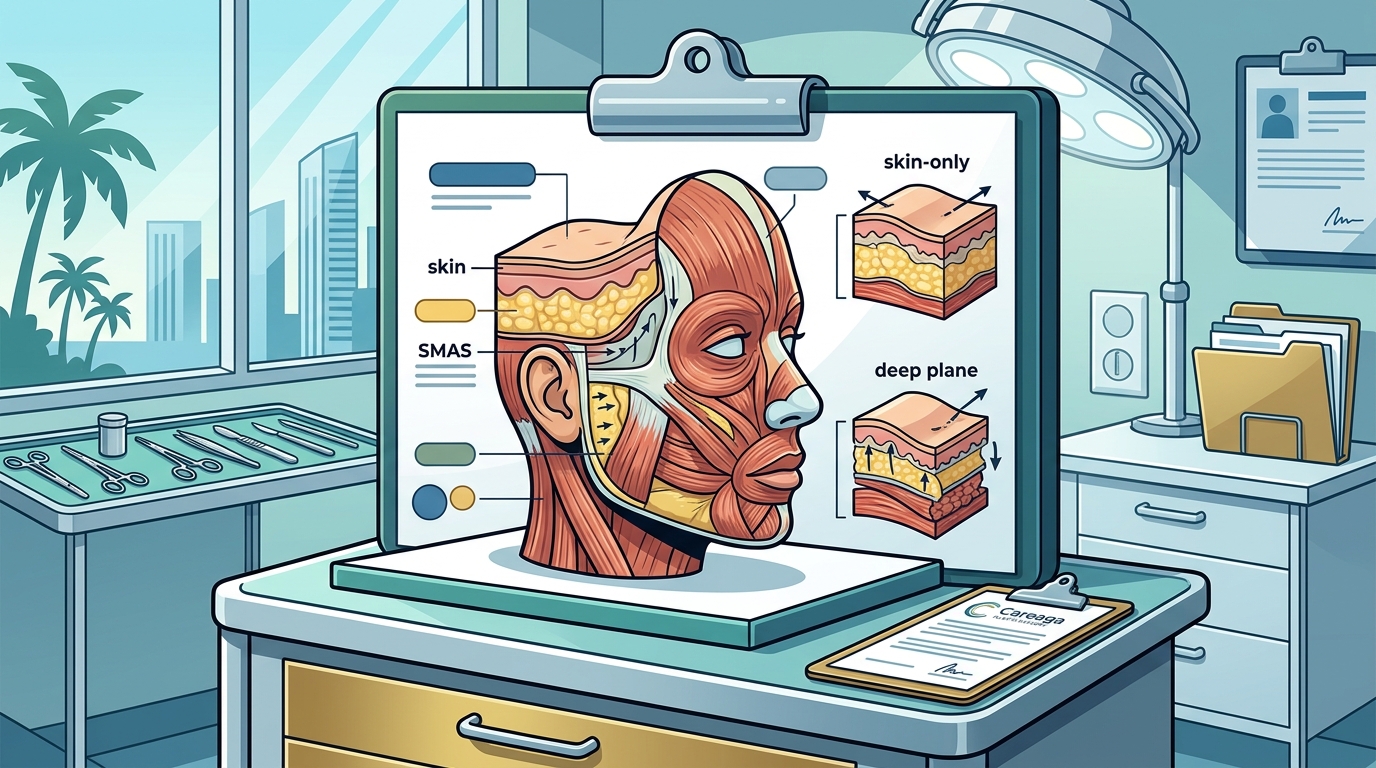
A deep plane facelift is a surgical procedure that lifts the midface and lower face by releasing the deep muscular aponeurotic system (SMAS) and repositioning the underlying tissues. Unlike traditional skin-only lifts, this technique addresses the root causes of aging by moving the fat pads and muscles rather than just pulling the skin. This approach results in a more natural, long-lasting outcome that avoids the "windblown" look associated with older techniques. For additional details, review the 508 Resource Limit Is.
Why Choose a Deep Plane Approach?
The deep plane technique allows for significant correction of jowls, nasolabial folds, and marionette lines. By working in the deeper tissue layers, surgeons can achieve a smoother transition between the cheek and jawline. Patients in Miami often seek this procedure because it provides a comprehensive rejuvenation that addresses multiple areas of the face in a single operation. For additional details, review the .
Surgeon Expertise in Miami
Not all plastic surgeons perform deep plane facelifts. It is a complex technique that requires specific training and experience. Dr. Daniel Careaga at Careaga Plastic Surgery is known for his expertise in facial rejuvenation, including advanced facelift techniques. When selecting a surgeon, it is crucial to verify their specific experience with deep plane methods and review their before-and-after galleries to ensure the results align with your expectations. For additional details, review the Customer Experience.
Botox and Neuromodulators
Botox and other neuromodulators are injectable treatments that temporarily relax facial muscles to reduce the appearance of dynamic wrinkles. These treatments are often used in conjunction with surgical facelifts to address upper face lines that surgery does not correct. They provide a quick, non-invasive way to smooth forehead lines, frown lines, and crow's feet. For additional details, review the Frequently Asked Questions.
How Neuromodulators Work
Neuromodulators work by blocking the nerve signals that cause muscle contractions. When the muscles are relaxed, the overlying skin appears smoother. The effects typically last three to four months, requiring periodic maintenance. This makes them an ideal complement to a facelift, as they can be administered before or after surgery to fine-tune the overall facial balance. For additional details, review the About.
Integration with Surgical Plans
Many patients at Careaga Plastic Surgery combine Botox with their facelift plans. This combination allows for a holistic approach to aging. By addressing both the structural sagging (via surgery) and the dynamic lines (via injectables), patients achieve a more comprehensive rejuvenation. The timing of these injections is carefully planned by the surgical team to ensure optimal results.
Dermal Fillers
Dermal fillers are injectable substances used to restore volume, smooth wrinkles, and enhance facial contours. Hyaluronic acid fillers are the most common type used in Miami, as they are reversible and have a low risk of allergic reaction. Fillers can address volume loss in the cheeks, under-eyes, and lips, which often accompanies the sagging corrected by a facelift.
Volume Restoration and Contouring
As we age, we lose facial volume, leading to a hollowed appearance. Dermal fillers replace this lost volume, creating a more youthful, full look. In the context of a deep plane facelift, fillers can be used to further enhance the cheek projection and smooth the transition between the midface and lower face. This combination of lifting and filling provides a more dramatic and natural result.
Choosing the Right Filler
Chemical Peels
Chemical peels are topical treatments that exfoliate the skin to improve texture, tone, and overall appearance. They range from superficial peels that address mild discoloration to deep peels that treat severe sun damage and wrinkles. Peels are often recommended after a facelift to improve skin quality and enhance the final aesthetic outcome.
Skin Quality and Texture
A facelift lifts the skin, but it does not change the skin's texture or tone. Chemical peels address these issues by removing the outer layers of damaged skin. This process stimulates collagen production and reveals smoother, brighter skin underneath. For patients in Miami, where sun exposure is a significant factor, peels are an essential part of a comprehensive skin care regimen.
Post-Surgical Skin Refinement
After a deep plane facelift, the skin may appear smoother due to the lifting, but underlying sun damage or pigmentation issues may still be present. Chemical peels can be scheduled several weeks after surgery to address these concerns. This staged approach ensures that the skin is in optimal condition to complement the surgical lift. The care team at Careaga Plastic Surgery can guide you on the appropriate type of peel for your skin type and concerns.
Microneedling
Collagen Induction Therapy
Microneedling works by triggering the body's natural healing response. The micro-injuries created by the needles stimulate the production of new collagen and elastin, leading to firmer, smoother skin over time. Multiple sessions are typically required to achieve optimal results. This treatment is often combined with other therapies, such as chemical peels or fillers, to enhance overall skin rejuvenation.
Complementing Surgical Results
For patients who have undergone a facelift, microneedling can be used to further refine the skin's texture and tone. It is a gentle treatment that can be performed after the initial healing period. By improving the skin's quality, microneedling helps to maximize the longevity and appearance of the surgical lift. At Careaga Plastic Surgery, microneedling is offered as part of a personalized skin rejuvenation plan.
Treatment Comparison Table
| Treatment | Primary Benefit | Downtime | Duration of Results |
|---|---|---|---|
| Deep Plane Facelift | Lifts midface and lower face | 1-2 weeks | 5-10+ years |
| Botox/Neuromodulators | Reduces dynamic wrinkles | None | 3-4 months |
| Dermal Fillers | Restores volume and contours | Minimal | 6-18 months |
| Chemical Peels | Improves skin texture and tone | 1-7 days | 3-6 months |
| Microneedling | Stimulates collagen production | 1-3 days | 1-2 years |
Key Takeaways
- Deep plane facelifts address the root causes of aging by lifting deep tissue layers.
- Not all plastic surgeons in Miami perform deep plane facelifts; verify specific experience.
- Botox and neuromodulators are ideal for addressing dynamic wrinkles in the upper face.
- Dermal fillers restore lost volume and enhance facial contours for a more youthful look.
- Chemical peels improve skin texture and tone, complementing the structural lift of a facelift.
- Microneedling stimulates collagen production to tighten and smooth the skin.
- A comprehensive treatment plan often combines surgical and non-surgical approaches.
- Consulting with a board-certified plastic surgeon is essential for personalized advice.
Frequently Asked Questions
Who performs deep plane facelifts in Miami?
How is a deep plane facelift different from a traditional facelift?
A deep plane facelift lifts the deep muscular and fat layers, whereas a traditional facelift primarily pulls the skin. This results in a more natural and long-lasting outcome with a deep plane approach.
Can Botox be combined with a facelift?
Yes, Botox and other neuromodulators are often combined with facelifts to address dynamic wrinkles in the upper face that surgery does not correct.
How long do dermal filler results last?
Dermal filler results typically last between six and 18 months, depending on the type of filler used and the area treated.
Are chemical peels safe after a facelift?
Yes, chemical peels are often recommended after a facelift to improve skin texture and tone. The timing is carefully planned by the surgical team to ensure safety and optimal results.
Does microneedling help with skin tightening?
Yes, microneedling stimulates collagen and elastin production, which can lead to firmer, tighter skin over time.
How do I choose the right surgeon for a deep plane facelift?
Look for a board-certified plastic surgeon with specific experience in deep plane techniques. Review their before-and-after galleries and consult with them to discuss your goals and expectations.