
Finding the right surgeon for abdominoplasty is a critical decision that impacts your long-term health and aesthetic results. According to the American Society of Plastic Surgeons, abdominoplasty remains one of the most popular body contouring procedures, with millions of patients seeking correction of abdominal laxity and muscle separation. This statistic highlights the importance of choosing a provider who specializes in complex body contouring rather than a generalist. The goal is to ensure your safety while achieving a natural, toned appearance that reflects your hard work.
Verify Board Certification and Credentials
The first step in your search is confirming that your surgeon is board-certified by the American Board of Plastic Surgery (ABPS). This certification ensures the surgeon has completed rigorous training and adheres to strict ethical and safety standards. It is distinct from other medical boards that may use similar names but do not guarantee specialized plastic surgery training.
When researching candidates, look for surgeons who are members of the American Society of Plastic Surgeons (ASPS). Membership requires adherence to a code of ethics and continuing education. At Careaga Plastic Surgery, our team includes Dr. Daniel Careaga, who is a board-certified plastic surgeon dedicated to patient safety and aesthetic excellence. Verifying these credentials is non-negotiable for any serious candidate.
Additionally, check if the surgeon has hospital privileges for abdominoplasty. This indicates that a hospital has vetted their skills and credentials, providing an extra layer of safety. If a surgeon cannot demonstrate hospital privileges, it may be a red flag regarding their surgical competence or the safety of their private facility.
Evaluate Surgical Facility Safety Standards
Where your surgery takes place is just as important as who performs it. The surgical facility must be accredited by a recognized national, state, or local health agency. Accreditation ensures that the facility meets strict standards for equipment, staffing, and emergency protocols.
Look for facilities accredited by the American Association for Accreditation of Ambulatory Surgery Facilities (AAAASF), the American Association for Ambulatory Surgery Facilities (AAAHS), or The Joint Commission. These accreditations guarantee that the environment is sterile, well-equipped, and staffed by qualified professionals. Our state-of-the-art surgical facility is designed to provide the highest level of comfort and safety for all patients undergoing body contouring procedures.
Emergency preparedness is another critical factor. The facility should have protocols for handling complications such as bleeding, infection, or anesthesia reactions. Ask your surgeon about their emergency procedures during your consultation. A qualified surgeon will openly discuss these details to put your mind at ease.
Analyze Before and After Portfolios
Reviewing a surgeon's before and after photos is essential for understanding their aesthetic style and technical skill. Look for patients with a body type similar to yours. This helps you visualize potential outcomes and assess the surgeon's ability to achieve natural-looking results.
Pay attention to the consistency of the results. A skilled surgeon will produce high-quality outcomes across a diverse range of patients. At Careaga Plastic Surgery, we provide a comprehensive gallery of patient results to help you make an informed decision. These photos demonstrate our commitment to precision and artistic balance in every procedure.
Also, consider the healing timeline shown in the photos. Early post-operative results may show swelling, but long-term photos reveal the final contour. A qualified surgeon will show you healed results, typically six to twelve months after surgery, to give you a realistic expectation of your outcome.
The Consultation Process and Communication
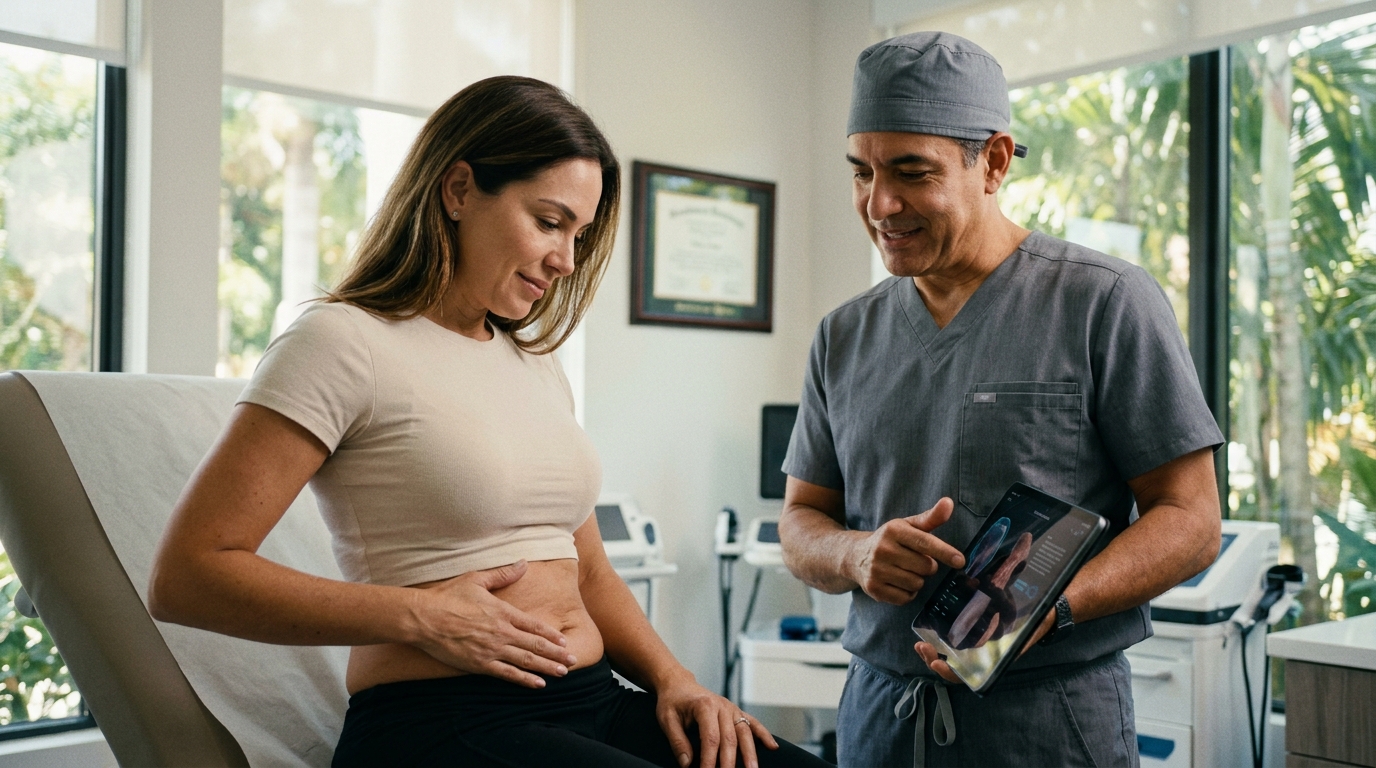
A thorough consultation is your opportunity to ask questions and gauge the surgeon's communication style. A qualified surgeon will take the time to listen to your goals and explain how they can help you achieve them. They should also discuss the risks, recovery process, and expected outcomes in detail.
During the consultation, the surgeon will perform a physical examination to assess your abdominal skin, muscle tone, and fat distribution. This assessment helps determine the best surgical approach for your unique anatomy. For example, a full tummy tuck may be recommended for significant skin laxity, while a mini tummy tuck might suffice for minor concerns below the navel.
Trust your instincts during this meeting. If you feel rushed, dismissed, or pressured, it may be a sign to seek another opinion. A good surgeon will make you feel comfortable and confident in your decision. Contact us today to schedule your personalized consultation and discuss your goals.

Understanding Tummy Tuck Variations
Abdominoplasty is not a one-size-fits-all procedure. There are several variations designed to address different patient needs. Understanding these options helps you have a more informed discussion with your surgeon.
| Procedure Type | Best For | Key Features |
|---|---|---|
| Full Tummy Tuck | Significant skin laxity and muscle separation | Incision from hip to hip, navel repositioning |
| Mini Tummy Tuck | Moderate laxity below the navel | Shorter incision, limited muscle repair |
| Liposuction Combined | Stubborn fat deposits with good skin tone | Contouring of flanks and abdomen |
| Lower Body Lift | Massive weight loss patients | Comprehensive contouring of abdomen, hips, and thighs |
Each procedure requires a different level of expertise. A surgeon who specializes in body contouring will be better equipped to handle the complexities of these variations. For instance, Mommy Makeovers often combine a tummy tuck with breast procedures, requiring a surgeon with broad expertise in both areas.
Recovery times also vary by procedure type. A mini tummy tuck may have a shorter recovery than a full tummy tuck. Your surgeon will provide a detailed recovery plan tailored to your specific procedure. Following these instructions is crucial for optimal healing and results.
Key Takeaways
- Verify that your surgeon is board-certified by the American Board of Plastic Surgery (ABPS).
- Ensure the surgical facility is accredited by a recognized agency such as AAAASF or The Joint Commission.
- Review before and after photos of patients with similar body types to assess aesthetic consistency.
- Choose a surgeon who offers a thorough consultation and listens to your specific goals.
- Understand the different types of tummy tucks, including full, mini, and combined procedures.
- Check for hospital privileges, which indicate a higher level of vetted surgical competence.
- Trust your instincts during the consultation; comfort and communication are vital.
Frequently Asked Questions
What is the most important credential to look for in a plastic surgeon?
The most important credential is board certification by the American Board of Plastic Surgery (ABPS). This certification ensures the surgeon has completed specialized training in plastic surgery and adheres to strict safety and ethical standards.
How do I know if a surgical facility is safe?
Look for accreditation from recognized agencies such as the American Association for Accreditation of Ambulatory Surgery Facilities (AAAASF) or The Joint Commission. These accreditations guarantee that the facility meets strict standards for equipment, staffing, and emergency protocols.
What is the difference between a full tummy tuck and a mini tummy tuck?
A full tummy tuck addresses both the upper and lower abdomen, including muscle repair and navel repositioning. A mini tummy tuck focuses only on the area below the navel, involving a shorter incision and limited muscle repair. The choice depends on the extent of your skin laxity and muscle separation.
Can I combine a tummy tuck with other procedures?
Yes, many patients combine a tummy tuck with liposuction, breast augmentation, or a breast lift. This is often referred to as a Mommy Makeover. Combining procedures can reduce overall recovery time and cost, but it requires a surgeon with expertise in multiple areas.
How long is the recovery period for a tummy tuck?
Recovery varies by individual and the extent of the procedure. Most patients can return to light activities within two weeks, but strenuous exercise should be avoided for six to eight weeks. Your surgeon will provide a detailed recovery plan tailored to your needs.
What are the risks associated with abdominoplasty?
Like any surgery, abdominoplasty carries risks such as infection, bleeding, scarring, and anesthesia complications. Choosing a board-certified surgeon and an accredited facility significantly reduces these risks. A thorough consultation will help you understand the specific risks related to your health profile.
How do I find a surgeon who specializes in body contouring?
Look for surgeons who are members of the American Society of Plastic Surgeons (ASPS) and have a portfolio focused on body contouring. At Careaga Plastic Surgery, we specialize in body contouring procedures, including tummy tucks, liposuction, and body lifts.
Schedule Your Consultation
Finding the right surgeon is the first step toward achieving your aesthetic goals. By verifying credentials, evaluating facility safety, and reviewing portfolios, you can make an informed decision. At Careaga Plastic Surgery, we are committed to providing exceptional care and natural-looking results. Contact us today to schedule your consultation and take the first step toward a more confident you.