

Choosing to undergo a full body lift is a transformative decision that requires meticulous preparation and disciplined recovery. According to recent data from the American Society of Plastic Surgeons, the number of body contouring procedures has seen significant growth, with many patients seeking to address excess skin after massive weight loss. However, the difference between a smooth recovery and a complicated one often comes down to the choices made in the weeks leading up to surgery and the months following it. At Careaga Plastic Surgery, we see patients who have done their research but missed critical details that impact their final results. This guide outlines the most common pitfalls patients encounter and provides actionable strategies to ensure your journey with our Coral Gables surgical team is safe, comfortable, and successful. (Top Miami Plastic Surgeons)
The Critical Impact of Smoking and Nicotine
One of the most dangerous mistakes patients make is continuing to use tobacco or nicotine products before and after surgery. Nicotine is a potent vasoconstrictor, meaning it narrows blood vessels and severely restricts blood flow to the skin. In body lift surgery, where large flaps of skin are repositioned, blood supply is the lifeline of healing. Without adequate circulation, the risk of tissue necrosis (skin death) and wound dehiscence (wound opening) increases dramatically.
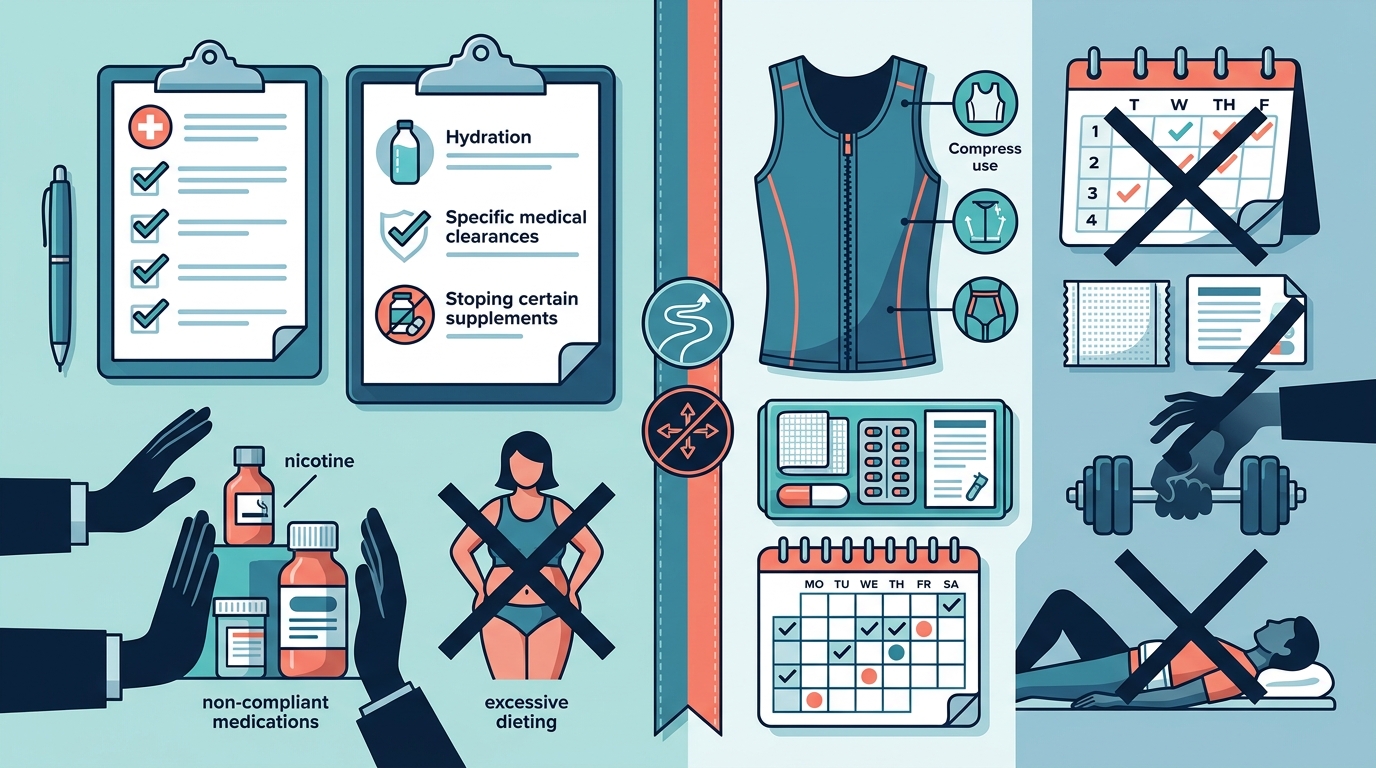
Many patients believe that switching to vaping or nicotine patches is a safe alternative. This is a misconception. Any form of nicotine, regardless of the delivery method, poses a significant risk to surgical outcomes. Our surgeons at Careaga Plastic Surgery require patients to be completely nicotine-free for a minimum of six weeks before and after surgery. This protocol is not arbitrary; it is based on extensive clinical data showing that nicotine-free patients have significantly lower complication rates and faster healing times. If you are struggling to quit, please discuss cessation resources with your primary care provider or our surgical coordinator during your consultation.
Ignoring Weight Stability Requirements
Another frequent error is scheduling surgery before achieving a stable weight. A full body lift is a contouring procedure, not a weight-loss procedure. If you continue to lose or gain weight after surgery, the results will be compromised. Excess weight loss can lead to new pockets of loose skin, while weight gain can stretch the tightened tissues and distort the aesthetic outcome.
Most board-certified plastic surgeons recommend maintaining a stable weight for at least six to twelve months prior to surgery. This stability ensures that the surgical plan is based on your current body composition, allowing for precise incision placement and skin removal. At our Coral Gables practice, we evaluate your weight history during the consultation to determine if you are an ideal candidate. If you are still actively losing weight through our physician-supervised medical weight loss programs, we will advise you to wait until your weight has plateaued. This patience pays off in more predictable and lasting results.
Overlooking Medication Interactions
Patients often underestimate the impact of common over-the-counter medications and supplements on surgical safety. Non-steroidal anti-inflammatory drugs (NSAIDs) such as ibuprofen, naproxen, and aspirin can increase bleeding during surgery. Similarly, certain herbal supplements like ginkgo biloba, garlic, and fish oil can also thin the blood and interfere with the clotting process.
It is crucial to provide your surgeon with a complete list of all medications and supplements you are taking. Our team will provide specific instructions on which medications to stop and when. Typically, patients are asked to stop these substances two weeks before surgery. Failing to disclose these items can lead to unexpected bleeding, bruising, and longer recovery times. Transparency with your surgical team is the first step toward a safe procedure.
Underestimating Recovery Costs and Time
While the cost of the surgery itself is a significant consideration, many patients fail to account for the ancillary costs of recovery. A full body lift is a major procedure that requires a dedicated recovery period. You will need compression garments, which are essential for reducing swelling and supporting the new contours. Additionally, you may need assistance with daily activities for the first few weeks, which could involve hiring help or taking time off work.
Understanding the financial and logistical aspects of your recovery is part of the decision-making process. Careaga Plastic Surgery offers transparent pricing guides and financing options to help make your transformation accessible. During your consultation, we will discuss the specific needs of your body lift plan, including the estimated duration of compression garment use and the timeline for returning to light activities. Being prepared for these aspects allows you to focus entirely on healing.
Neglecting Compression and Lymphatic Drainage
Post-operative care is just as important as the surgery itself. One of the most common mistakes patients make is removing compression garments too early or inconsistently. Compression garments help minimize swelling, support the skin as it adheres to the underlying tissue, and improve contour definition. Wearing them as directed is non-negotiable for optimal results.
Additionally, patients often neglect the importance of lymphatic drainage massage. After a full body lift, fluid accumulation (lymphedema) is a common side effect. Professional lymphatic drainage massage can help move this fluid out of the tissues, reducing swelling and speeding up recovery. Our practice recommends starting these sessions a few weeks after surgery, once your incisions have healed sufficiently. Incorporating this therapy into your recovery plan can significantly enhance your comfort and final aesthetic outcome.
Choosing the Right Surgeon for Complex Cases
Perhaps the most critical mistake is choosing a surgeon based solely on price or location without verifying their expertise in complex body contouring. A full body lift is a technically demanding procedure that requires a deep understanding of anatomy, blood supply, and aesthetic principles. Not all plastic surgeons are comfortable or qualified to perform this level of surgery.
At Careaga Plastic Surgery, our founder, Dr. Daniel Careaga, is double board-certified and has performed over 15,000 procedures. His experience with massive weight loss patients and complex body contouring ensures that you are in capable hands. We operate in our own JCAHO Gold Seal accredited facility, which provides an additional layer of safety and comfort. When evaluating surgeons, look for board certification, extensive experience with body lifts, and a portfolio of before-and-after photos that match your aesthetic goals. The Our Practice page provides more details about our commitment to safety and excellence.
Key Takeaways
- Nicotine is a major risk factor: Quit all nicotine products at least six weeks before and after surgery to ensure proper blood flow and healing.
- Weight stability is essential: Maintain a stable weight for 6-12 months prior to surgery to ensure lasting results.
- Disclose all medications: Stop NSAIDs and blood-thinning supplements two weeks before surgery to prevent excessive bleeding.
- Plan for recovery costs: Budget for compression garments, possible assistance, and time off work.
- Wear compression garments: Follow your surgeon's instructions strictly to reduce swelling and support contours.
- Consider lymphatic massage: Professional massage can significantly speed up recovery and reduce fluid accumulation.
- Verify surgeon expertise: Choose a double board-certified surgeon with extensive experience in body contouring, like Dr. Daniel Careaga.
Frequently Asked Questions
How long do I need to stay off work after a full body lift?
Recovery times vary based on the extent of the surgery and your job demands. Most patients require two to four weeks off work for sedentary jobs and up to six weeks for physically demanding roles. Your surgeon will provide a personalized timeline based on your healing progress.
What is the ideal BMI for full body lift surgery?
While there is no single "ideal" BMI, most surgeons prefer patients to have a BMI below 30 to reduce surgical risks. However, body composition and overall health are more important than BMI alone. Our team will evaluate your specific health profile during your consultation.
Will a full body lift remove all excess skin?
A full body lift removes a significant amount of excess skin and tightens the underlying tissues. However, it is not a cure for all skin laxity. The goal is to create a smoother, more contoured silhouette. Individual results vary, and some minor residual laxity may remain.
How do I choose between a full body lift and individual procedures?
A full body lift is often more cost-effective and efficient for patients with widespread excess skin, particularly after massive weight loss. It allows for a comprehensive approach to contouring. Individual procedures may be suitable for those with localized concerns. Dr. Careaga can help you determine the best approach for your anatomy.
What are the risks of full body lift surgery?
Like any major surgery, risks include bleeding, infection, scarring, and fluid accumulation. However, these risks are minimized by choosing an experienced surgeon, following pre- and post-operative instructions, and undergoing surgery in an accredited facility. Our blog offers more insights into patient safety and care.
Can I combine a full body lift with other procedures?
Yes, it is common to combine a full body lift with other procedures such as a tummy tuck, breast lift, or liposuction to achieve a harmonious result. This approach is often referred to as a "mommy makeover" or "dad makeover" depending on the patient's goals. Discuss your comprehensive aesthetic goals with your surgeon.
How soon can I exercise after surgery?
Light walking is encouraged immediately after surgery to promote circulation. However, strenuous exercise and heavy lifting should be avoided for at least six weeks. Your surgeon will clear you for specific activities as your healing progresses.
Begin Your Transformation with Confidence
Avoiding these common mistakes is the key to a successful full body lift journey. By preparing thoroughly, choosing the right surgeon, and committing to your recovery plan, you can achieve the confident, contoured body you deserve. At Careaga Plastic Surgery, we are dedicated to guiding you through every step of this process with expertise and compassion. We invite you to schedule a free consultation to discuss your goals and learn more about how we can help you achieve your transformation. Book your consultation today and take the first step toward a new you.