
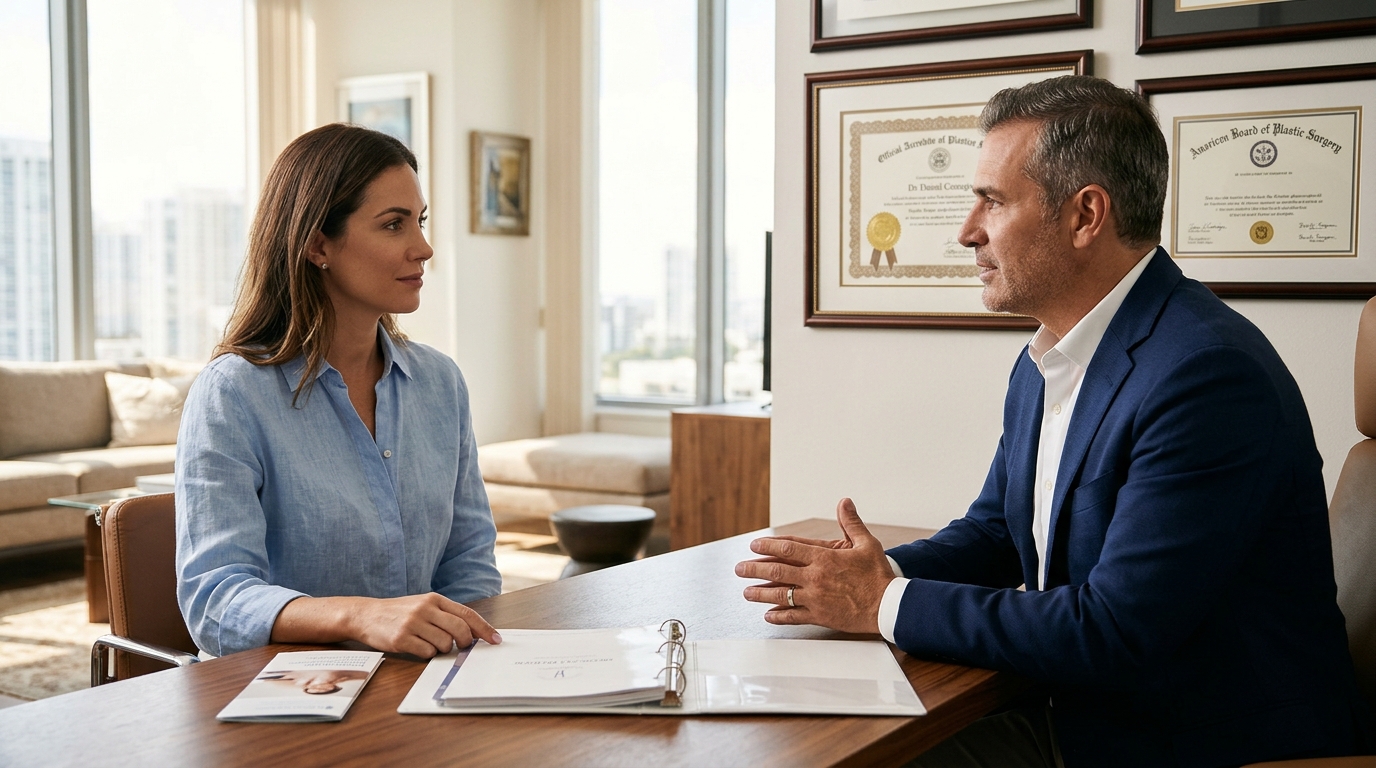
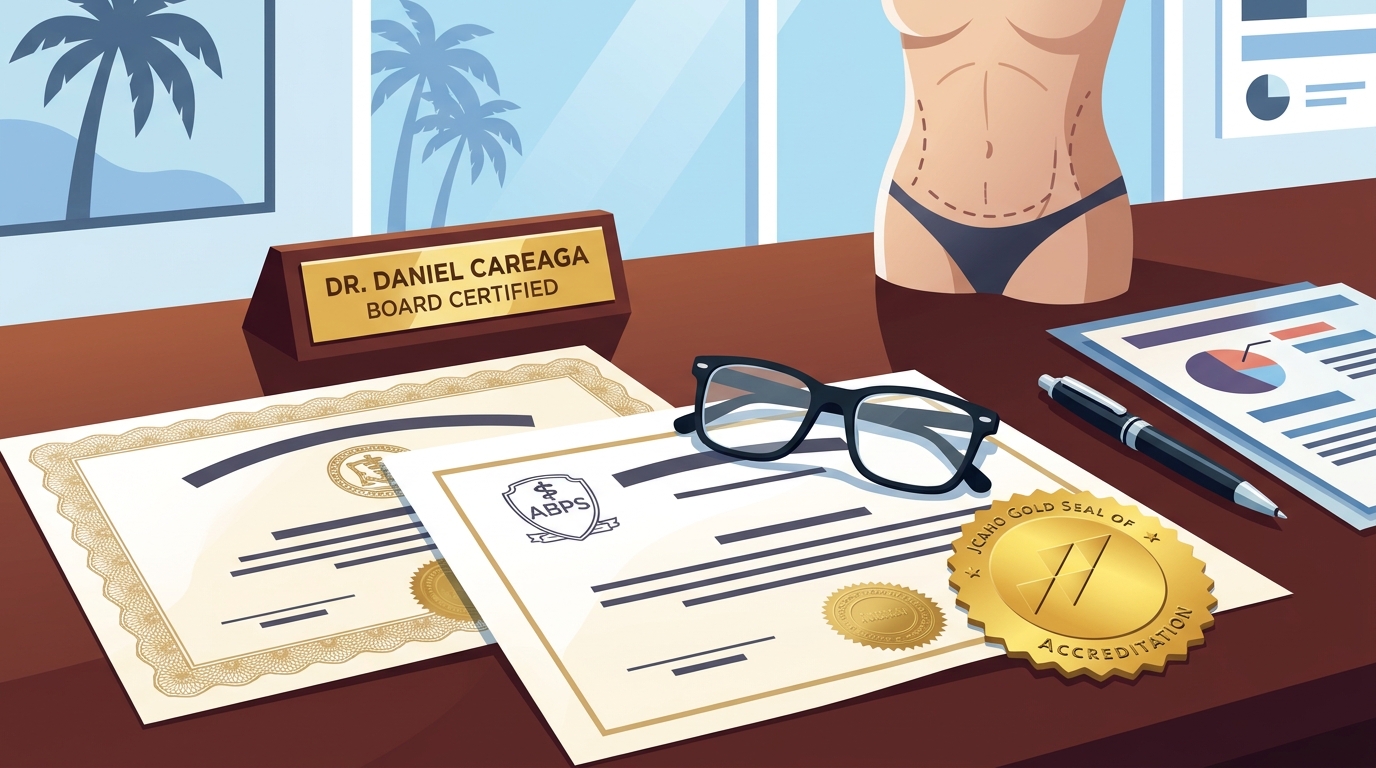
Before choosing a Miami surgeon for abdominoplasty, you must verify that the doctor holds active board certification from the American Board of Plastic Surgery (ABPS) and practices in a JCAHO Gold Seal accredited facility. These two credentials are the non-negotiable baseline for safety. Dr. Daniel Careaga, the founder of Careaga Plastic Surgery, is double board-certified, holding credentials from both the American Board of Surgery and the American Board of Plastic Surgery. This dual certification ensures a higher standard of surgical training and anatomical knowledge.
The Difference Between Board Certification and Board Eligibility
Many patients confuse board eligibility with board certification. Board eligibility is a temporary status that allows a surgeon to sit for the certification exam. It does not mean the surgeon has passed the exam or completed the required training. Board certification is the permanent credential that proves a surgeon has completed a full residency and passed rigorous examinations. In Miami, where many clinics advertise "board certified" without specifying the board, you must ask which board issued the certificate. The American Board of Plastic Surgery is the only board recognized by the American Board of Medical Specialties for plastic surgery. A surgeon certified by a non-recognized board does not meet the national standard of care.
Why Double Board Certification Matters for Tummy Tucks
Abdominoplasty is a complex procedure that involves both general surgical principles and specialized plastic surgery techniques. A surgeon who is double board-certified, like Dr. Careaga, has completed training in both general surgery and plastic surgery. This background is critical for managing the abdominal wall, repairing muscle diastasis, and handling potential complications. General surgery training provides a deep understanding of anatomy and emergency management, while plastic surgery training focuses on aesthetics and tissue handling. This combination reduces the risk of complications and improves the long-term durability of the results. Patients should ask if their surgeon has completed a fellowship in plastic surgery, which is an additional year of specialized training beyond residency.
Verifying Facility Accreditation and Anesthesia Safety
The location where your surgery is performed is as important as the surgeon's credentials. A JCAHO Gold Seal accredited facility meets strict standards for patient safety, infection control, and emergency preparedness. This accreditation is not a marketing badge; it is a rigorous audit process that ensures the facility can handle medical emergencies. In Miami, some high-volume clinics operate in non-accredited facilities to cut costs. This is a major red flag. You should also verify that a board-certified anesthesiologist, not a nurse anesthetist or the surgeon themselves, will manage your anesthesia. An anesthesiologist is a physician who has completed additional years of training specifically in anesthesia. They are responsible for monitoring your vital signs and managing any complications that arise during the procedure. according to How to Verify
Checking for Disciplinary Actions and Malpractice History
Board certification does not guarantee a perfect track record. You should check the state medical board website for any disciplinary actions, license suspensions, or malpractice claims against the surgeon. In Florida, the Department of Health maintains a public database of physician disciplinary actions. A history of repeated complaints or sanctions is a clear warning sign. Additionally, ask the surgeon about their complication rate and how they handle adverse events. A transparent surgeon will discuss their experience with complications and their protocol for managing them. Avoid surgeons who guarantee perfect results or dismiss concerns about safety. Your safety is the top priority, not the aesthetic outcome.
How to Verify Credentials in Under 10 Minutes
You can verify a surgeon's board certification by visiting the American Board of Plastic Surgery website and searching their name in the "Find a Surgeon" directory. This directory lists only surgeons who are currently certified and in good standing. You can also verify the facility's accreditation by checking the JCAHO website. These checks take less than 10 minutes and can save you from a dangerous mistake. At Careaga Plastic Surgery, we encourage all patients to verify our credentials. We are transparent about our training, accreditation, and safety protocols. We believe that informed patients make the best decisions. If a surgeon is hesitant to provide their board certification number or facility accreditation details, walk away.
Key Takeaways
- Board certification from the American Board of Plastic Surgery is the gold standard for plastic surgeons.
- Double board certification, including general surgery, provides a stronger safety profile for complex procedures like abdominoplasty.
- JCAHO Gold Seal accreditation ensures the surgical facility meets strict safety and emergency preparedness standards.
- A board-certified anesthesiologist should manage your anesthesia, not a nurse or the surgeon.
- Check the state medical board website for any disciplinary actions or malpractice history.
- Verify credentials independently using the ABPS and JCAHO websites before booking a consultation.
Frequently Asked Questions
Is board certification required for plastic surgeons in Florida?
While not legally required to practice medicine, board certification is the standard of care for plastic surgery. Most reputable surgeons hold board certification from the American Board of Plastic Surgery. Patients should insist on this credential to ensure safety.
What is the difference between a plastic surgeon and a cosmetic surgeon?
A plastic surgeon is a physician who has completed a residency in plastic surgery and is board-certified. A cosmetic surgeon is a broader term that can include physicians from other specialties, such as dermatology or general surgery, who perform cosmetic procedures. Only board-certified plastic surgeons have completed the specific training required for complex reconstructive and aesthetic procedures.
How do I verify if a surgeon is board-certified?
You can verify board certification by searching the surgeon's name in the American Board of Plastic Surgery directory. This directory is publicly available and lists all currently certified surgeons. You can also ask the surgeon to provide their board certification number.
Why is facility accreditation important?
Facility accreditation ensures that the surgical center meets strict standards for safety, infection control, and emergency preparedness. Non-accredited facilities may not have the equipment or protocols to handle medical emergencies, which can be life-threatening.
What should I ask about the anesthesiologist?
You should ask if the anesthesiologist is board-certified and if they will be present in the operating room for the entire procedure. A board-certified anesthesiologist is a physician who has completed additional training in anesthesia and is responsible for your safety during the procedure.
Can I check a surgeon's malpractice history?
Yes, you can check a surgeon's malpractice history by visiting the state medical board website. In Florida, the Department of Health maintains a public database of physician disciplinary actions and malpractice claims. This information is available to the public and can help you make an informed decision.
Conclusion
Choosing the right surgeon for abdominoplasty is a critical decision that requires careful verification of credentials. By checking for board certification, facility accreditation, and a clean disciplinary record, you can protect your safety and ensure the best possible outcome. At Careaga Plastic Surgery, we are committed to transparency and safety. We encourage you to verify our credentials and ask us any questions you may have. To schedule a consultation with Dr. Daniel Careaga, today.